Hand-Knotted vs Hand-Woven Rugs: How to Tell the Difference (and Choose the Right One)

Two time-honoured techniques — and what sets them apart
On any given day in our Golden Square showroom in Petworth, someone will pause over a rug and ask, “Is this hand-knotted or hand-woven?”
It’s a good question — and an important one.
Because the answer influences how a rug feels underfoot, how it lives in your space, and the role it plays in your home.
So let’s take a closer look at these two time-honoured techniques — and what sets them apart.
What is a hand-knotted rug?

Hand-knotted rugs are made knot by knot on a loom, with each individual knot tied by hand around vertical warp threads.
Row by row, the weaver builds the surface:
- tying individual knots
- securing them with weft threads
- beating each row down to create a dense, durable pile
The result is a rug with:
- depth and texture
- subtle variation
- exceptional longevity
Run your hand across a hand-knotted rug and you’ll feel it immediately — that soft, directional pile, full of life.
Because of the time and skill involved, hand-knotted rugs take longer to make — and that’s precisely what gives them their durability, integrity, and ability to age so beautifully over time.
What is a hand-woven (flat-weave) rug?
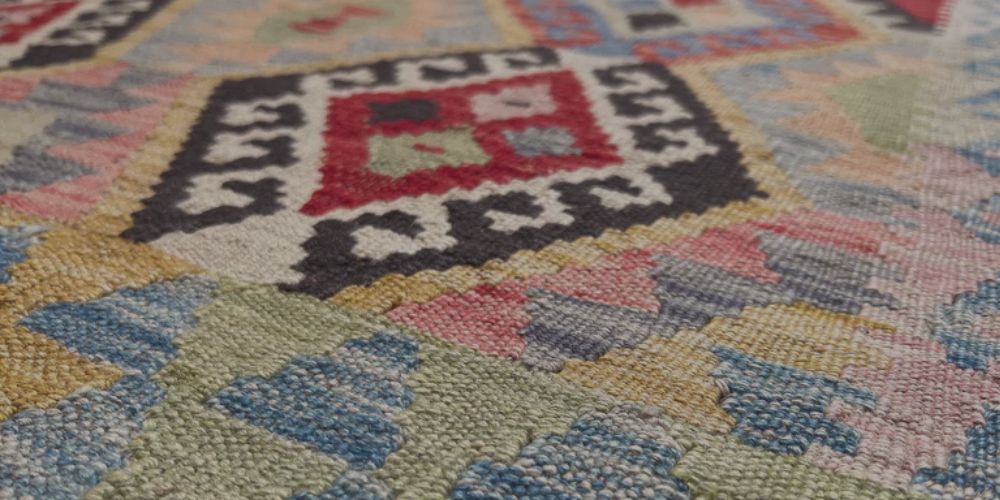
Hand-woven rugs — often called flat-weaves — are made by interlacing yarns through the loom, rather than tying knots.
There is:
- no pile
- no raised surface
- just the structure itself forming the pattern
The most well-known examples are Kilim rugs.
They are:
- lightweight
- flexible
- often reversible
- easy to move and layer
Hand-woven rugs bring colour and pattern without the weight or thickness of a pile rug.

How to tell the difference at a glance
If you’re ever unsure, here are a few simple ways to tell:
Feel
- Hand-knotted: soft pile with direction
- Flat-weave: flat, textured surface
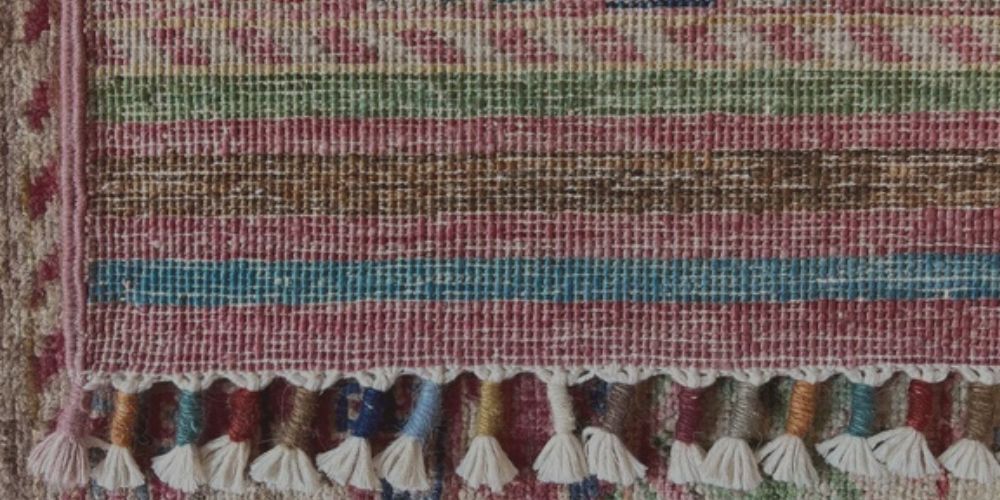
Back of the rug
- Hand-knotted: visible grid of individual knots
- Flat-weave: pattern mirrored cleanly through
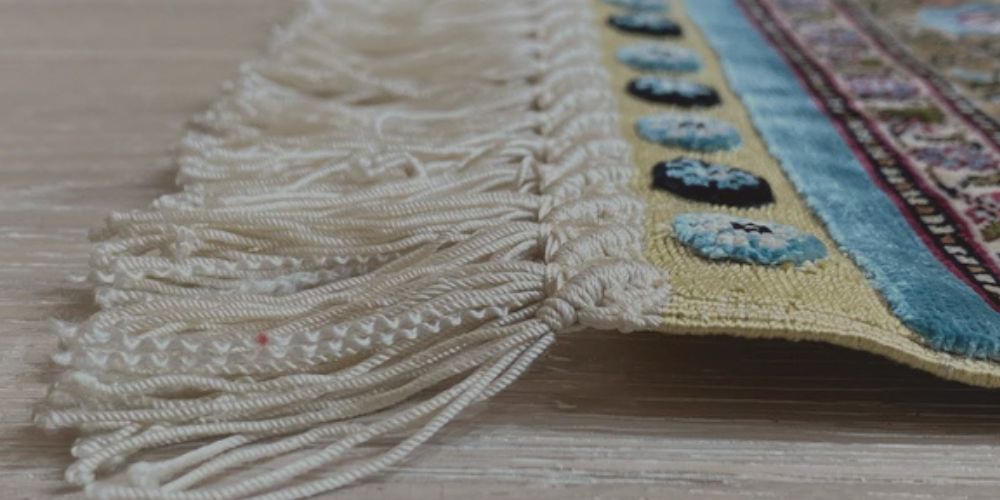
Fringe
- In both cases, genuine fringes are part of the structure (not sewn on)
Weight and drape
- Hand-knotted: heavier, more structured
- Flat-weave: lighter, more flexible
Where each works best in the home

Hand-knotted rugs
Perfect for:
- living rooms
- bedrooms
- hallways
They offer:
- comfort underfoot
- durability in high-traffic areas
- long-term investment value
These are the rugs that settle into a home and improve with time.
👉 You can explore our hand-knotted rug collection
Hand-woven (flat-weave) rugs
Ideal for:
- dining areas
- kitchens and garden rooms
- layering over larger natural fibre rugs
They’re especially useful where:
- doors need clearance
- flexibility matters
- you want a lighter, more relaxed feel

Design and character
Hand-knotted rugs allow for:
- intricate detail
- subtle colour variation
- softer, more complex designs
This is where traditional craftsmanship meets what we call Modern Classic — pieces that feel rooted in history but sit effortlessly in today’s homes.
Flat-weaves, by contrast, bring:
- bold geometrics
- clean lines
- a more graphic, informal feel
Both have their place — it simply depends on the mood you want to create.
Care and longevity
Both types are surprisingly easy to live with.
- Regular hoovering (avoid fringes with brush heads)
- Occasional rotation
- Professional cleaning when needed
We offer specialist cleaning, along with repair services to keep your rug in excellent condition for years to come.
Provenance matters
Every rug we source is:
- genuinely handmade
- clearly labelled
- responsibly sourced
We work directly with artisans across: Turkey, Afghanistan, Pakistan, India and Nepal
This isn’t just about quality — it’s about preserving traditional craftsmanship and ensuring transparency in what you bring into your home.
Come and feel the difference
Nothing compares to seeing — and feeling — the difference in person.
Our Petworth showroom holds over a thousand handmade rugs, from large statement pieces to runners and smaller accents.
If you’re deciding between hand-knotted and hand-woven, we’ll happily:
- lay out options
- talk through your space
- help you find the right fit
You’re always very welcome to visit us in Petworth, or explore our collections online.
Final thought
Both techniques are beautiful. Both are rooted in long-standing tradition.
The difference isn’t about one being better than the other —
it’s about how you live, how you use your space, how your budget guides you, and how you want a rug to feel underfoot.
Some rooms call for the softness and depth of a hand-knotted piece.
Others suit the lightness and ease of a flat-weave.
And whether you choose one or the other — or a mix over time — the right rug is simply the one that feels at home in your space.

Written by Alex Rees