What Makes a Rug Truly Valuable?
Why some rugs last a lifetime — while others don’t
At first glance, many rugs can look surprisingly similar.
From a distance, it’s not always easy to tell what sets one apart from another - especially when colours, patterns and sizes overlap. But beneath the surface, the differences can be significant.
What gives a rug its true value isn’t always obvious at first. It’s not just about how it looks on day one, but how it’s made, how it wears, and how it becomes part of a home over time.

It starts with the materials
One of the most important - and often overlooked - factors is what a rug is made from.
Natural fibres, particularly wool, behave very differently to synthetic alternatives. Wool has a natural resilience and elasticity, allowing it to spring back under pressure rather than flattening over time. It also contains lanolin, which helps to repel dirt and makes it surprisingly forgiving in everyday use.
This is why a well-made wool rug doesn’t simply wear out - it wears in.
Over time, the surface softens, the fibres settle, and the rug develops a quieter, more lived-in character rather than losing its integrity.

How it’s made matters
Construction plays a crucial role in how a rug performs over time.
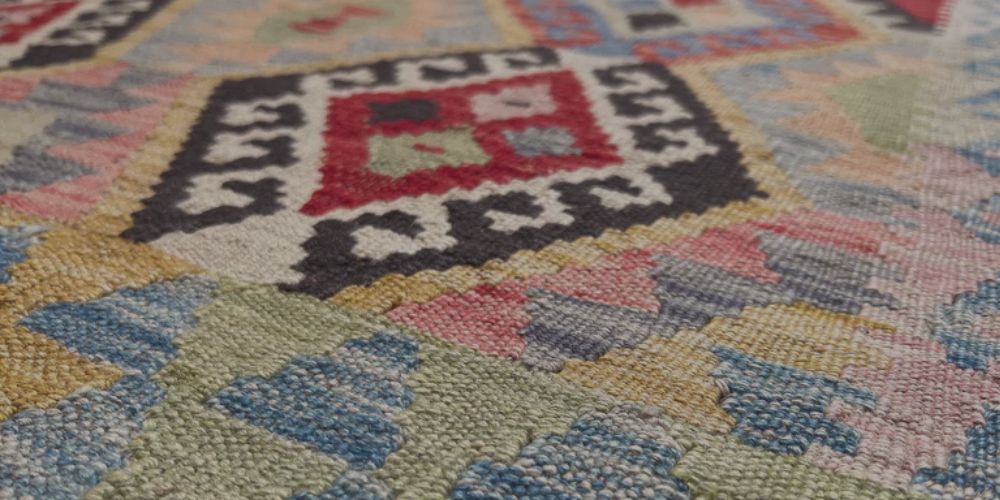
Hand-knotted rugs, for example, are built knot by knot, creating a dense and stable structure that holds its form for years - often decades. This density isn’t just about durability; it also allows for greater clarity in pattern and detail.
Machine-made rugs, by contrast, are produced quickly and efficiently, but they don’t have the same depth of structure. They may look similar at first, but they tend to wear more quickly and lack the same long-term resilience.
It’s not always something you notice immediately - but it becomes clear with time.

Design with a sense of place
Many of the rugs we work with are rooted in long-established weaving traditions.
Patterns, colours and motifs often reflect the regions they come from - shaped by local materials, techniques and cultural influences passed down over generations. This gives each rug a sense of identity and continuity that goes beyond surface decoration.
Even within the same style, no two pieces are exactly alike.
That individuality is part of what gives a rug its character - and its lasting appeal.

The human element
Every handmade rug carries the mark of the people who made it.
From the setting up of the loom to the final finishing stages, the process relies on skill, patience and experience. Small irregularities in pattern or tone are not flaws, but a reflection of this human involvement.
They are what make each rug unique.
It’s a quieter kind of value - one that isn’t about perfection, but about authenticity.
How a rug lives in a room
Perhaps the most defining difference is how a rug behaves over time.
A well-made rug doesn’t remain static. It softens, settles and adapts to its surroundings. Colours mellow slightly, fibres relax, and the piece begins to feel integrated into the space rather than placed within it.
This is what gives a rug longevity - not just in terms of durability, but in how naturally it becomes part of everyday life.

A considered investment
When choosing a rug, it’s easy to focus on immediate appearance - colour, size, how it fits within a room.
But the real value lies in what happens next.
A thoughtfully made rug will continue to evolve, improve and endure. It becomes something you live with, rather than something you replace.
And that is what makes it truly valuable.

Written by Alex Rees